


Cancer Patients Caregiver Education in Cancer Prevention and Early Detection: A Hospital-Based Initiative Tata memorial Hospital
Details
Cancer Patients Caregiver Education in Cancer Prevention and Early Detection: A Hospital-Based Initiative Tata memorial Hospital
(Jyoti Somabhai Patel)
Cancer Patients Caregiver Education in Cancer Prevention and Early Detection: A Hospital-Based Initiative Tata memorial Hospital
Since 1993, I have been working at Tata Memorial Hospital and have had the privilege of communicating closely with thousands of cancer patients and their relatives. Over more than three decades of experience, one consistent observation has stood out: caregivers and family members of cancer patients carry a deep sense of fear, confusion, and unanswered questions about cancer. While patients receive structured medical care, their relatives often remain overwhelmed, anxious, and inadequately informed about the disease.
During daily interactions in outpatient clinics, wards, and screening programs, caregivers repeatedly expressed concerns such as: Is cancer hereditary? Can it be prevented? How can we detect cancer early? What symptoms should we watch for? Many of these questions remained unaddressed due to time constraints, lack of structured education, and limited access to reliable information. This gap highlighted a critical need—cancer awareness should not be limited to patients alone but must actively include caregivers.
Recognizing this unmet need, the concept of a Caregiver Awareness Programme was developed at Tata Memorial Hospital. The primary objective of this programme is to empower caregivers with accurate knowledge, reduce fear and stigma associated with cancer, and promote early detection through awareness and screening.
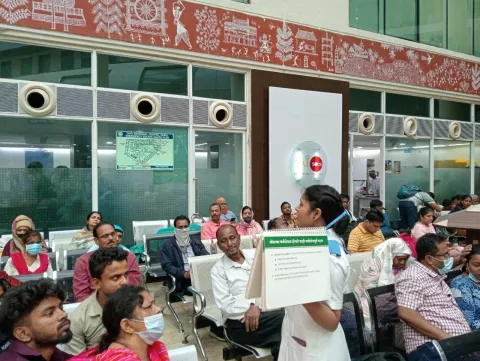
The caregiver programme focuses on oral, cervical, and breast cancer, which are among the most common and preventable cancers in India. Using simple, culturally appropriate flip charts, caregivers are educated about:
- Common signs and symptoms of oral, cervical, and breast cancers
- Risk factors such as tobacco use, poor oral hygiene, and lack of regular screening
- The importance of early detection and timely referral
- Preventive measures and healthy lifestyle practices
Special emphasis is placed on breast self-examination (BSE) and awareness of cervical cancer screening methods. Demonstrations are conducted in an interactive manner, encouraging caregivers to ask questions freely and share their concerns. This approach not only improves understanding but also builds confidence and trust.
An important strength of this programme is its accessibility. Caregivers are already present in the hospital environment, making it an ideal opportunity to reach a high-risk and highly motivated group. Many caregivers, after attending the sessions, expressed a willingness to share the knowledge with their families and communities, thereby extending the impact beyond the hospital setting.
The caregiver programme has shown that informed caregivers become partners in cancer prevention. By transforming fear into knowledge and uncertainty into action, this initiative contributes to early detection, timely care, and long-term cancer control. Integrating caregiver-focused education into routine cancer care is a simple yet powerful strategy that can significantly strengthen preventive oncology efforts in low- and middle-income countries like India