


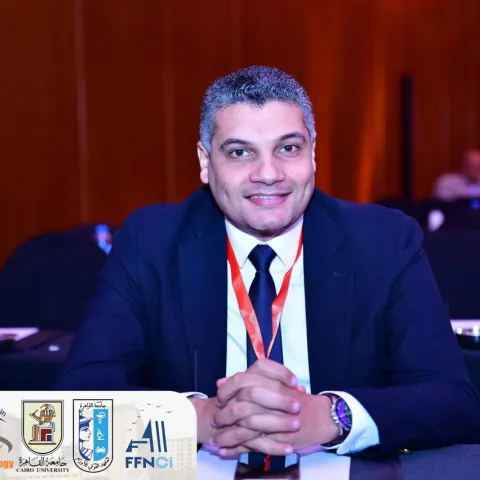
Ahmed, Egypt
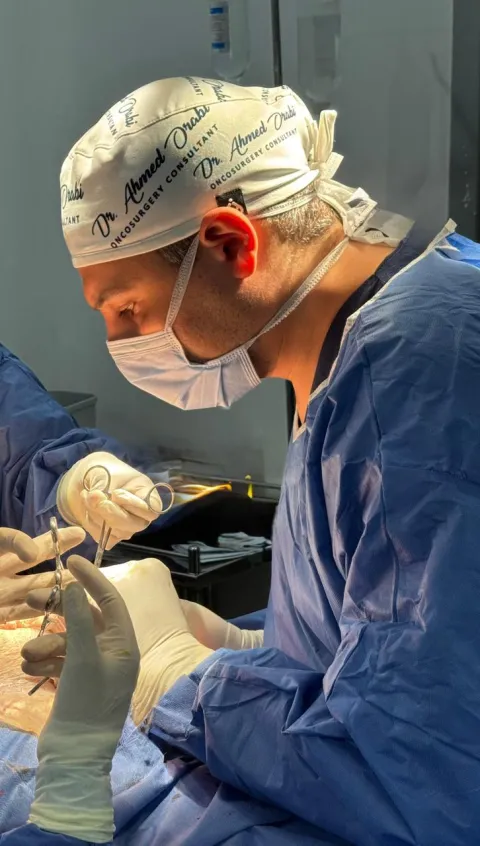
I am Dr. Ahmed Orabi, Consultant and lecturer of surgical oncology at National Cancer Institute, Cairo University and consultant of oncoplastic breast surgery at Baheya hospitals.
Working in oncology has taught me that health is the most precious thing in the world. A person can be perfectly healthy, with a stable life, and in a single second, a cancer diagnosis can turn their entire world upside down.
During a consultation with one of my breast cancer patients to schedule her surgery, she was accompanied by a relative. I took a moment to ask the relative about her age; realizing she was older, I advised her that she should also get screened just to be safe.
When the patient returned for her post-operative follow-up, the same relative was with her. She thanked me warmly for my previous concern and for advising the early detection. As it turned out, she had followed my advice, which led to the discovery of a malignant tumor in its first stage. Because it was caught early, she was able to receive treatment and recover completely.
In another case, a patient’s treatment plan required a total mastectomy. When she first heard the decision, she was terrified and decided to stop treatment altogether. However, she returned about six months later, telling me she had reconsidered and wanted to proceed.
I made it a priority to reassure her and explain exactly what would happen after the surgery. I walked her through the reconstruction process, explaining that her breast’s appearance would be restored as close to natural as possible and that there was no need for such fear. She underwent the surgery, and later sent me a message thanking me for the support. she told me the results were excellent, she felt beautiful after the reconstruction, and the procedure had made a world of difference to her.
Constantly interacting with these cases has shifted my perspective on life. It has made me realize that a patient’s life has social and financial dimensions that we cannot ignore. We shouldn't view her as just a "case", at the end of the day, she is a human being with a life.
Many patients see their marriages impacted by the illness for example; we are often surprised to find they have separated from their partners after the diagnosis. Dealing with such circumstances day in and day out plants qualities within a doctor that might not have been there before, things like deep patience and true understanding.