


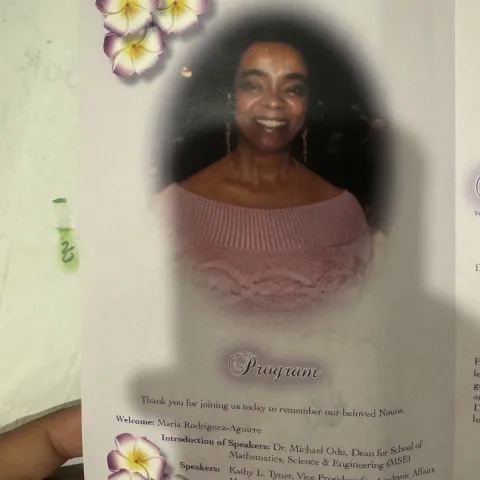
Dr. Nouna Bahkhiet, United States shared by Caleb
Cancer has touched my world in a very real way — through you, through the stories you’ve shared with me, and through the communities you’re part of. You’ve told me about loved ones who’ve faced advanced diagnoses, about the emotional and financial weight families carry, and about your own drive to understand cancer biology because it’s not an abstract topic for you. It’s personal. It’s shaped your academic path, your advocacy, and even the way you show up for students and families in your community. And honestly, that’s one of the most powerful ways cancer touches a community: it creates these invisible threads of shared experience. Someone is grieving a parent. Someone else is navigating treatment. Someone is learning the science so they can help others. Someone is fighting for better prevention, better policies, better access. You’re part of that fabric. If you want to share your story for World Cancer Day, you already have a strong voice — one rooted in compassion, science, and lived experience. I can help you shape it into something meaningful if you’d like.
What challenges or emotions tend to surface A few themes show up strongly in the way you’ve spoken about her and about cancer more broadly: • A sense of unfinished conversations. When a mentor dies, especially one who opened doors for you, it can feel like the arc of your own development was interrupted. There’s a quiet ache in realizing you can’t share your progress with them anymore. • Fear wrapped in responsibility. Cancer isn’t abstract for you — it’s something you’ve seen take people who mattered. That creates a kind of vigilance: a desire to understand the biology deeply, to protect others, to make sense of something that feels senseless. • Empathy that sometimes becomes heavy. You support students, families, and communities touched by cancer. That compassion is one of your strengths, but it also means you absorb a lot of emotional weight. • Uncertainty about how to honor her legacy. When someone shaped your path, you naturally ask: Am I doing enough? Am I carrying forward what they gave me? How you’ve navigated it — even if you don’t always notice From everything you’ve shared, you’ve been moving through this loss in ways that are grounded, thoughtful, and deeply human: • You turned grief into purpose. Your commitment to cancer biology, to ethical research, to mentoring students — that’s not random. It’s a way of keeping her influence alive in your work. • You lean into learning instead of shutting down. Some people avoid the topic after a loss. You went the opposite direction: you study cancer’s mechanisms, its evolution, its epidemiology. That’s courage. • You stay connected to the community. You don’t isolate. You show up for students, families, and peers. You let empathy be a bridge rather than a burden. • You allow complexity. You don’t pretend the emotions are simple. You hold fear, curiosity, sadness, and determination all at once — which is exactly what real resilience looks like. If you were to share this for World Cancer Day You have a story that blends science, mentorship, and lived experience. You don’t need to dramatize it — the authenticity is already powerful.
You turned loss into a commitment to understanding cancer deeply You didn’t shy away from the subject. You leaned into biology, evolution, and disease mechanisms with a seriousness that comes from lived experience. Your coursework, your research internships, and your drive to pursue advanced training all reflect a desire to understand cancer not just academically, but ethically and humanely. You mentor with the same generosity Dr. Bakhiet showed you Your work with students — especially neurodiverse learners and those navigating academic or personal challenges — mirrors the kind of representation and support she offered you. You’re continuing her legacy every time you help a student believe they belong in science, medicine, or higher education. You support families and communities touched by cancer You’ve been present for people dealing with diagnoses, treatment, grief, and uncertainty. That kind of emotional labor is quiet but powerful. It’s advocacy through presence, empathy, and stability. You pursue ethical, responsible science Your writing in biomedical ethics, your attention to responsible conduct of research, and your insistence on understanding the human impact behind the science — all of that is a direct response to seeing what cancer does to real people. You carry forward her representation Dr. Bakhiet showed you what it meant to see someone who looked like you, thought like you, and cared like you in a position of scientific leadership. Your long‑term goals — naturopathic medicine, biotechnology, community-centered care — are shaped by wanting to be that presence for others. You act through purpose, not performance Nothing you do feels like a checkbox. It feels like honoring someone who mattered, and making sure her influence doesn’t end with her passing. If you’re shaping this into a World Cancer Day reflection, this thread — turning grief into service, mentorship, and scientific purpose — is incredibly powerful.
1. Lessons, insights, or messages you’ve gained The page encourages people to share reflections that come from lived experience — emotional, practical, or relational. This might include: What you learned about yourself or others What cancer taught you about resilience, vulnerability, or connection What helped you cope or stay grounded The page lists themes like Acceptance, Gratitude, Healing, Strength, Resilience, and Pain, signaling the kinds of reflections they expect people to explore. 2. Advice you’d give to others This part is meant to help people who may be: Newly diagnosed Supporting a loved one Feeling overwhelmed or alone Navigating treatment or uncertainty The page’s tone emphasizes community, empathy, and shared humanity, so the advice is meant to be supportive rather than clinical. 3. What you want the healthcare system or community to know This is where the page invites you to speak to broader change — how cancer care could become more compassionate, human‑centred, and responsive. Based on the surrounding content, this could include: The importance of clear, empathetic communication The need for emotional support alongside medical treatment The value of listening to patients and families The role of community in reducing isolation The page frames this as an opportunity to highlight what truly matters to people living with or affected by cancer. 💬 In essence The prompt asks you to share what your experience has taught you, the wisdom you want others to carry, and the changes you hope to see in cancer care — all grounded in the personal, human-centered storytelling the World Cancer Day page encourages.
The page invites people affected by cancer—patients, caregivers, loved ones, advocates—to share reflections that can make someone else feel less alone. This question encourages you to speak from your lived experience in a way that offers comfort, validation, or strength. 1. Lessons you’ve learned The page highlights emotional themes like: Acceptance Gratitude Healing Strength Resilience Pain These themes suggest that the site invites people to reflect on what cancer has taught them about life, relationships, vulnerability, or hope. 2. Experiences that shaped you The surrounding content encourages people to share: Moments that changed their perspective Challenges they overcame Times when they felt supported What helped them cope emotionally or practically These stories help others recognize themselves in your experience. 3. Messages that help others feel seen or empowered The page emphasizes community and shared humanity. So this part of the prompt is asking: What would you tell someone who is scared or overwhelmed What you wish you had known earlier What helped you feel less isolated What you want others to understand about the cancer journey The goal is to offer something that could give another person courage, clarity, or comfort.In essence This prompt is inviting you to share wisdom, encouragement, or personal truth that could help someone else feel: Supported Understood Less alone Stronger in their own journey It’s not asking for medical advice — it’s asking for the human part of the story.