


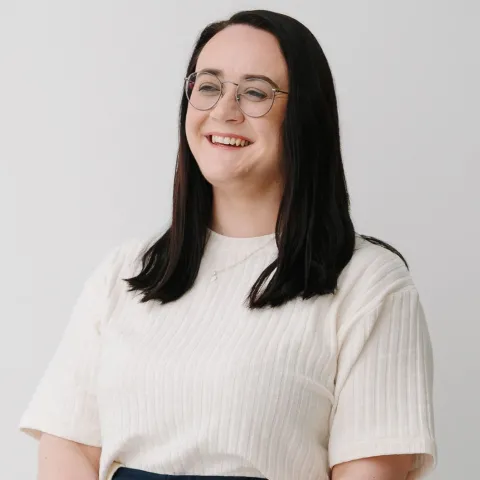
Chloe, New Zealand
Ova Achiever: My Struggle With Ovarian Cancer At 32
I’ve always had a feeling that I’d be blindsided with something awful — like some kind of karmic redress for all of the mistakes I’ve ever made. Anxiety is a wicked thing, isn’t it? But I’ll openly admit, I don’t think I ever would have guessed being diagnosed with ovarian cancer at 32.
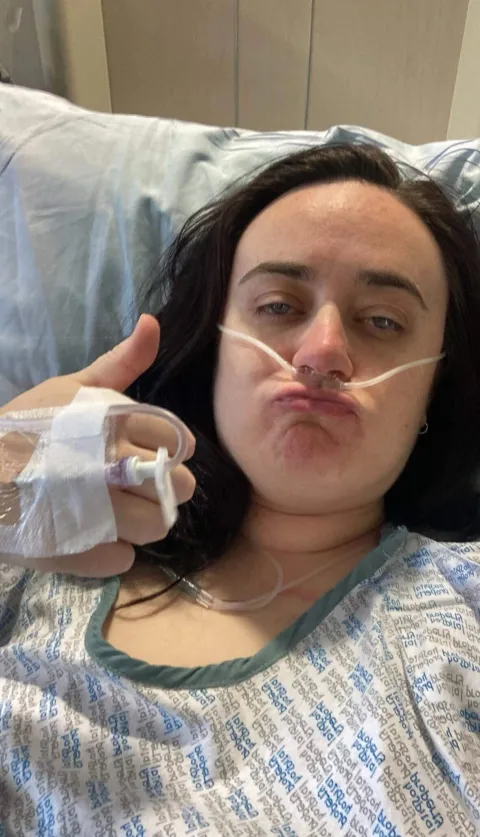
October 31st, 2023 turned out to be the most frightening Halloween I’ve ever had. What started as a normal morning dragging myself out of bed to hit the bathroom quickly devolved into collapsing on my stairs with excruciating pain in my abdomen.
It was like nothing I had ever experienced.
By the time I arrived at the emergency department, I was slick with sweat and so disorientated that I was still in my pyjamas, my glasses had gone AWOL and my phone was on 20% battery. I must have been quite the sight.
Over the next few hours of tests and observations, the pain blessedly subsided. Honestly, I felt a little embarrassed, like I had made the whole thing a much bigger deal than it needed to be in a fit of hysteria or something similar. Surely it was something like gallstones or a ruptured cyst? Just an affliction that was short and sharp in its appearance.
I was getting frustrated at this point; didn’t my body, the doctors, the universe, know I had a life to get back to? I wanted a pat on my head and to be sent on my way. I had work to catch up on, and lunch to eat.
When the doctors finally returned to my bedside, they brought with them news that may as well have been delivered by shotgun with the impact it had. With a comforting hand on my knee and unbearable sympathy in their eyes, they told me they had found a mass the size of a tennis ball attached to my right ovary. A mass that had twisted it and caused my intense pain.
A mass that might very well be cancerous.
Ovarian cancer is New Zealand’s second-most prolific but deadliest gynaecological cancer, with one person dying every 48 hours due to its effects. Cells within the ovaries begin to grow abnormally and then rapidly proliferate, causing dysfunction before possibly spreading to other organs. It’s typically found in those who are postmenopausal or in their 50s and upwards, but, while uncommon, it can also be present in 20 and 30-year-olds and even children as well. Due to its wiley nature, surgery and chemotherapy are the typical treatments.
It’s also an incredibly poorly diagnosed cancer due to its ambiguous symptoms and lack of common screening tests like the ones you have for something like breast cancer. According to the Ovarian Cancer Foundation NZ, “The majority of women experience symptoms before they are diagnosed, sometimes when ovarian cancer is at an early stage. However, the significance of these symptoms can be easily missed by women and health professionals alike, reducing survival.”
But had it really come out of nowhere for me? Like any person under duress, I did find myself questioning the “what ifs” of it all. Yes, I was fit and healthy when I presented acutely at the emergency department on that fateful day, but I had also spent years battling the system to get a polycystic ovary syndrome (PCOS) diagnosis. Among the pushback of what many people have probably experienced when presenting their symptoms (“Have you tried losing weight? Changing your lifestyle? Did you know that women’s bodies are just like that?”), I almost stopped advocating for myself.
With PCOS being a possible risk factor for ovarian cancer, would I have been in this position if I had an earlier diagnosis? Maybe not, and the little friend attached to my ovary was here regardless.
As with most abnormal growths in the body, I wouldn’t be able to get a formal diagnosis (whether it be good or bad) until they had biopsied the mass — not so easily done given its location deep within a soup of organs. For the good of my health, a mass of that size needed to be surgically removed anyway, so I would have to wait until then to find out the state of it all. And so began the ultimate test of endurance while I waited the few weeks until my surgery date.
The thought of a prolonged wait within the public health system is a genuinely harrowing proposition. I regularly see stories popping up in the local news about ongoing staffing issues, funding mishaps and protracted wait times. While dealing with something as aggressive as ovarian cancer, a months-long wait was untenable. It’s no wonder that I took a lengthy moment to consider going private, regardless of the financial burden.
So a mere two weeks after the surgery to take out my right ovary, I was called in for my post-op follow-up. During that time, I had a shockingly pragmatic outlook. I was healing incredibly well, and in what was either positivity or ignorance, I was certain that there was just no way that I had cancer. It was going to be another tale in my infinite collection of stories to spin a yarn with. A close call we could all laugh about — “Ovarian mass? Does that mean you’re Catholic now?”
As you’ve probably already figured, that wasn’t the case. As soon as I was asked if I wanted a support person with me, I knew it was cancer, and with it, my mortality was pulled into such sharp a focus that it stole the breath right from my lungs. While my internal monologue was screaming a mantra of “don’t cry, don’t cry, don’t cry”, bits and pieces from my wonderful specialist still managed to make their way through.
It’s cancer, but Stage 1. There’s still cancer in there, so more surgery. Could possibly skip chemo. Overall outlook is good. I’m sorry this is happening.
With that, I stumbled out of the hospital into the waiting arms of my mother and cried with a vulnerability that I hadn’t felt since childhood.
So I had cancer. It felt like a massive cosmic prank, because I had an impossible time believing it to be true. No matter how relatively common cancer diagnoses are within your sphere of influence, with an expectation that you’ll be affected by it at some point in your life, you never quite predict to be the one with the big C.
And weirdly, the fact that it was me was the easy part. Telling my family, friends and workmates? Well, seeing their fear and anxiety over me hurt exponentially more than everything else I had been through. So while bearing their emotions to my diagnosis, I also had to manage my own. Rage, so incandescent that it would make my hands shake if I let it. Dread, so atlassian I was almost crushed under its weight. And a type of unreasonable guilt that I still carry with me even now.
But I did come into a sort of acceptance of having cancer, especially now that a whole new avenue of dark humour had opened up for me. So when my next hospital appointment came up, I was feeling something close to reserved optimism again.
After being given time to digest my diagnosis, it was time to discuss next steps. Unsurprising to no one, the biggest impediment to consider was whether I wanted to give birth to my own children or not. My options were slim at this point. Remove the remaining ovary and maybe control the cancer with ongoing hormone treatments and chemotherapy, or undergo a full hysterectomy to remove all of the reproductive machinery I had left and, all going well, be done with cancer for good.
A hysterectomy at my age comes with its own set of consequences, but I didn’t have it in me to bank my long-term health and quality of life on some theoretical child that I may or may not have in the future. My doctors gave me time to consider my choice, but I had already decided then and there — bin it all.
After a rapid and vigorous fertility treatment process to freeze some of my eggs for potential future use, a total hysterectomy in Christchurch Women’s Hospital, expeditiously followed with an agonising three-week stay in Dunedin Hospital with an array of complications, I could finally get a respite from the barrage to my body and begin to heal in earnest.
So within the span of six months, I received both a cancer and cancer-free diagnosis. The following six months (and still today, truthfully) saw me concentrating on my recovery and figuring out what normal looks like for me now. Both my mind and body are irrevocably different — even my belly button has changed! And despite feeling simultaneously galvanised and completely undone by what I’ve been through, I need to come to terms with the fact that cancer will always be a part of my identity now. Apart from having to have check-ups and observations for the rest of my life, the only way to remove “cancer survivor” as a moniker is to, well, not survive it.
With the lack of detection options and a disheartening knowledge gap within our communities, advocacy and awareness are our best tools right now. It’s why I’m sharing my story — maybe it will motivate someone to get tested for their symptoms or encourage them to support the wonderful awareness organisations we have here in New Zealand.
Because our mothers, sisters, daughters, friends, coworkers, neighbours and community members deserve more than the luck that I had to find ovarian cancer as early as I did; they deserve to thrive.
Originally published by Ovarian Cancer Foundation New Zealand: https://ovariancancerfoundation.org.nz/ovarian-cancer-story/ova-achiever-my-struggle-with-ovarian-cancer-at-32/