


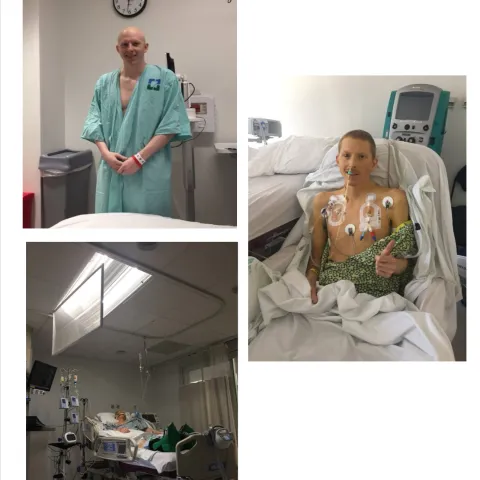
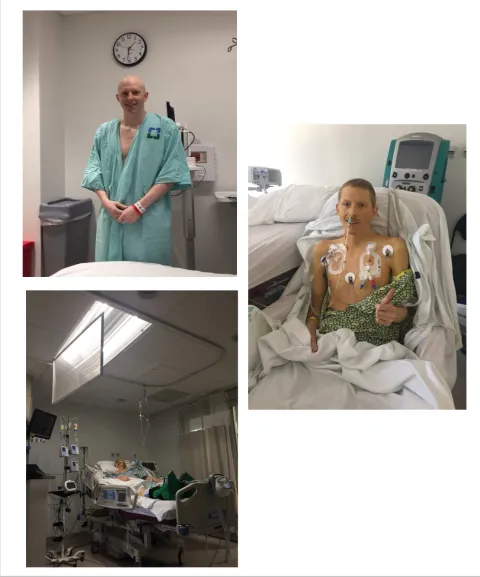
Matt Ode, United Kingdom shared by Dr.Tshetiz
Early in my training, I realized that cancer is not just a biological disease—it is a systems problem. Two patients with the same diagnosis can have entirely different outcomes depending on where they live, how early they are diagnosed, and whether prevention or screening ever reached them. That disparity stayed with me. As a researcher, it became clear that generating data is not enough unless it is locally relevant, interpretable, and capable of changing practice. Working with population-level data—such as cancer registries—was especially formative. Seeing preventable cancers like cervical cancer continue to dominate incidence statistics, or advanced gastrointestinal cancers presenting late due to lack of early detection, reframed cancer for me as a failure of opportunity, not just treatment. Research offered a way to quantify those missed opportunities and translate them into evidence for policy, screening programs, and system-level reform. Cancer research also sits at a unique intersection of biology, public health, and human behavior. It allows one to study molecular mechanisms and, at the same time, examine how culture, diet, infection, access to care, and health systems shape disease patterns. That breadth is intellectually compelling—but more importantly, it makes the work meaningful. Each dataset represents real lives, real delays, and real preventable suffering. Ultimately, what sustains my commitment is the belief that well-designed, context-specific research can reduce inequity. Even incremental improvements—earlier diagnosis, better screening coverage, clearer referral pathways—can translate into substantial survival gains at the population level. Being part of that process, where evidence informs action, is what brought me to cancer research and continues to keep me there. Meeting individual patient needs in a one-size-fits-many system Cancer care demands personalization—biologically, psychologically, socially. Yet most healthcare systems are designed for efficiency, not individuality. Patients come with different: • levels of health literacy • cultural beliefs about illness and treatment • financial and family responsibilities • tolerance for uncertainty and side effects Providing people-centred care means aligning treatment with what matters most to the patient, not just what is clinically optimal. The challenge is that clinic time is limited, guidelines are rigid, and shared decision-making often becomes rushed. True personalization requires time, continuity, and trust, all of which are scarce resources.
From a cancer researcher’s point of view, what drew me into cancer care and research was the uneasy gap between what we know scientifically and what patients actually experience on the ground. Early in my training, I realized that cancer is not just a biological disease—it is a systems problem. Two patients with the same diagnosis can have entirely different outcomes depending on where they live, how early they are diagnosed, and whether prevention or screening ever reached them. That disparity stayed with me. As a researcher, it became clear that generating data is not enough unless it is locally relevant, interpretable, and capable of changing practice. Working with population-level data—such as cancer registries—was especially formative. Seeing preventable cancers like cervical cancer continue to dominate incidence statistics, or advanced gastrointestinal cancers presenting late due to lack of early detection, reframed cancer for me as a failure of opportunity, not just treatment. Research offered a way to quantify those missed opportunities and translate them into evidence for policy, screening programs, and system-level reform. Cancer research also sits at a unique intersection of biology, public health, and human behavior. It allows one to study molecular mechanisms and, at the same time, examine how culture, diet, infection, access to care, and health systems shape disease patterns. That breadth is intellectually compelling—but more importantly, it makes the work meaningful. Each dataset represents real lives, real delays, and real preventable suffering. Ultimately, what sustains my commitment is the belief that well-designed, context-specific research can reduce inequity. Even incremental improvements—earlier diagnosis, better screening coverage, clearer referral pathways—can translate into substantial survival gains at the population level. Being part of that process, where evidence informs action, is what brought me to cancer research and continues to keep me there.
1. Meeting individual patient needs in a one-size-fits-many system Cancer care demands personalization—biologically, psychologically, socially. Yet most healthcare systems are designed for efficiency, not individuality. Patients come with different: • levels of health literacy • cultural beliefs about illness and treatment • financial and family responsibilities • tolerance for uncertainty and side effects Providing people-centred care means aligning treatment with what matters most to the patient, not just what is clinically optimal. The challenge is that clinic time is limited, guidelines are rigid, and shared decision-making often becomes rushed. True personalization requires time, continuity, and trust, all of which are scarce resources. 2. Navigating fragmented healthcare systems For many patients, especially in cancer care, the system itself becomes an additional burden. Common challenges include: • multiple referrals across institutions • lack of coordination between diagnostics, treatment, and follow-up • administrative complexity and long waiting periods • geographic and financial barriers From a people-centred lens, this fragmentation forces patients to act as their own care coordinators at precisely the moment when they are least able to do so. As providers or researchers, one of the hardest realities is knowing what should happen but being constrained by structural inefficiencies beyond individual control. 3. Balancing emotional care with clinical and practical demands Cancer is emotionally heavy—for patients, families, and care teams. People-centred care requires: • acknowledging fear, grief, and uncertainty • supporting caregivers, not just patients • communicating honestly without overwhelming The challenge is that emotional labour is often invisible, undervalued, and uncompensated in healthcare systems. Clinicians and researchers are trained to manage disease, but not always to sit with distress. Over time, this imbalance can lead to emotional fatigue or burnout, which paradoxically undermines the very empathy that people-centred care depends on. 4. Equity: when “choice” isn’t really a choice One of the most difficult tensions in people-centred care is recognizing that not all patients have equal capacity to choose. Socioeconomic constraints, gender roles, rural residence, and stigma can silently shape decisions. For example: • a patient may decline treatment not due to preference, but due to cost or caregiving duties • late presentation may reflect access barriers rather than negligence • adherence issues may stem from transportation or nutrition insecurity Providing people-centred care in such contexts means advocating within the system, not just respecting expressed preferences. That advocacy role can be ethically complex and emotionally taxing. The biggest challenge is trying to deliver humane, individualized care within systems that were not designed to be humane or individualized. People-centred care asks us to slow down, listen deeply, and adapt—but healthcare systems push us to move fast, standardize, and measure throughput. Living in that tension—every day—is the core challenge.
From my perspective, the healthcare system both enables and constrains people-centred care at the same time. The tension between those two forces largely determines whether care feels humane and inclusive—or fragmented and impersonal—for people living with cancer. Where the healthcare system supports people-centred care 1. Growing recognition of patient voice and shared decision-making There has been a meaningful shift toward acknowledging patients as active partners in care rather than passive recipients. Multidisciplinary tumor boards, informed consent processes, and survivorship discussions create space—at least in principle—for patient values and preferences to be considered. In oncology, this recognition matters because treatment choices often involve trade-offs between survival, toxicity, quality of life, and family responsibilities. When systems allow time for these conversations, people feel respected and involved. 2. Standardized pathways that reduce uncertainty Clinical guidelines, care pathways, and multidisciplinary teams can support people-centred care when they reduce delays, duplication, and confusion. For patients, predictability and clarity in the care journey are forms of compassion. When systems work well, they: • minimize unnecessary referrals • provide clear timelines • coordinate diagnostics and treatment This coordination relieves patients of the burden of navigating complexity on their own. 3. Increasing attention to psychosocial and supportive care There is growing acknowledgment that cancer care extends beyond chemotherapy or surgery. Psycho-oncology services, palliative care, survivorship clinics, and patient navigators—where available—represent important system-level support for people-centred care. These services validate emotional distress, caregiver burden, and social needs as legitimate components of care. Where the system limits people-centred care 1. Time pressure and throughput-driven models Perhaps the greatest barrier is the way healthcare is structured around volume and efficiency rather than relationship and continuity. Short consultations limit meaningful dialogue, shared decision-making, and emotional support. People-centred care requires time—to listen, to explain, to revisit decisions—but time is often the scarcest resource in clinical settings. 2. Fragmentation and poor care coordination Cancer care frequently spans multiple facilities, specialties, and administrative systems. For patients, this fragmentation translates into: • repeated histories • unclear accountability • gaps between diagnosis, treatment, and follow-up When coordination fails, patients and families are forced to become de facto care managers, which undermines dignity and equity. 3. Inequities disguised as “choice” While systems increasingly emphasize patient choice, not all patients have equal capacity to exercise it. Socioeconomic constraints, geography, language barriers, and caregiving responsibilities often shape decisions more than personal preference. In such contexts, “choice” can become a hollow concept. People-centred care is limited when systems fail to address the structural barriers that restrict real options. 4. Limited inclusion of patient perspectives in system design Although patient-centred language is common, people living with cancer are still rarely involved meaningfully in designing services, workflows, or policies. Feedback mechanisms often exist but are tokenistic, with limited influence on decision-making. True inclusion requires moving beyond consultation to co-creation—a step most systems have not yet taken. What works well—and what still needs to change What works well: • Recognition of patient autonomy and informed consent • Multidisciplinary care models • Integration of supportive and palliative care in some settings Key gaps: • Insufficient time for meaningful engagement • Fragmented care pathways • Structural inequities limiting real choice • Limited patient involvement in system-level decisions The healthcare system supports people-centred care when it prioritizes coordination, communication, and continuity. It limits it when efficiency, silos, and inequity overshadow human needs. To be truly people-centred, systems must shift from asking “How do we deliver care?” to “How do people experience care?”—and allow that answer to shape how services are designed, delivered, and evaluated.
If I had to distill what I’ve learned about people-centred care into a few core messages, it would be this: people-centred care is not an “add-on” to cancer care — it is cancer care. Everything else only works well when this foundation is in place. Below are the lessons I would share, and the advice I’d offer to professionals, organisations, and the healthcare system. Key lessons about people-centred care 1. Listen first — everything else follows The most consistent lesson is that listening changes outcomes. Not just listening for symptoms or side effects, but listening for fears, priorities, and constraints. Patients often know what matters most to them — maintaining independence, avoiding prolonged hospitalisation, being present for family — but they may not volunteer this unless explicitly invited. Care becomes more effective and more humane when those priorities shape decisions. 2. Clinical excellence and compassion are not opposites There is a false belief that compassion slows care or compromises efficiency. In reality, clear, empathetic communication reduces confusion, improves adherence, and prevents avoidable distress. People-centred care often saves time in the long run by reducing misunderstandings, repeated consultations, and conflict around expectations. 3. Context matters as much as diagnosis Cancer does not occur in a vacuum. Social, cultural, financial, and family contexts shape how people experience illness and treatment. Ignoring context leads to “non-adherence” labels and missed appointments; understanding context leads to realistic, respectful care plans. People-centred care is as much about social awareness as medical expertise. 4. Choice without support is not empowerment Offering options is not enough. True empowerment means ensuring people understand those options and have the resources to act on them. When systems present choice without addressing barriers like cost, transport, caregiving roles, or literacy, they unintentionally deepen inequity. People-centred care requires supporting decision-making, not just presenting it. 5. Emotional care is clinical care Fear, grief, uncertainty, and caregiver distress directly affect treatment tolerance and quality of life. Treating emotional needs as “secondary” undermines outcomes. Acknowledging emotions does not require long counselling sessions — it requires presence, validation, and knowing when to involve supportive services. This is a core clinical skill, not an optional one. Advice to professionals Slow down where it matters You don’t need more time everywhere — you need more time at key moments: diagnosis, treatment decisions, transitions, and end-of-life conversations. Those moments shape the entire care experience. Ask better questions Simple questions can transform care: • “What matters most to you right now?” • “What worries you the most about this plan?” • “What would make this harder to follow?” These questions reveal barriers that protocols cannot. Protect your own empathy Compassion is finite if unsupported. Reflective practice, peer support, and acknowledging emotional impact are not luxuries — they are what keep care humane over time. Advice to organisations Design care around the patient journey, not departments Patients experience care as a continuous journey, not as isolated services. Organisations should prioritise coordination, navigation support, and continuity. Value relational work Communication, care coordination, and emotional support should be recognised, measured, and rewarded — not treated as invisible labour. Include people living with cancer in decision-making Move beyond feedback surveys. Involve patients and caregivers as partners in service design, evaluation, and quality improvement. Co-creation leads to relevance. Advice to the healthcare system Measure what matters to patients Outcomes like quality of life, functional status, and patient-reported experience should carry as much weight as clinical endpoints. Address inequity as a design problem People-centred care cannot exist in systems that ignore structural barriers. Equity must be built into policies, funding, and access pathways. Support the workforce Compassionate care requires systems that care for clinicians too. Burnout is not an individual failure — it is a system signal. The core message People-centred cancer care is not about doing more — it’s about doing what matters, better. When systems listen, respect context, support choice, and value human connection, cancer care becomes not only more compassionate, but more effective.