


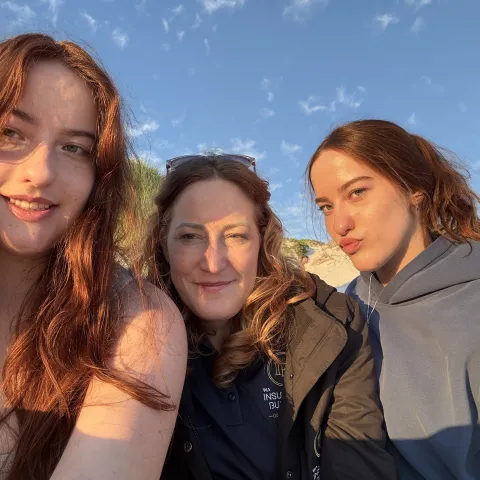
Emma, Australia
I never imagined I would be writing my story as a bowel cancer patient. Like so many women, I was busy living life working, parenting, leading, planning for the future and cancer simply wasn’t something I thought applied to me.
Just before Australia Day 2025, my world shifted. I was diagnosed with Stage 3 bowel cancer.
Those words don’t just stop you. They ripple through everything. Your plans, your work, your family, your sense of certainty. Suddenly, life feels fragile in a way you’ve never known before.
I’m a sole parent, and my children are my world. My first thoughts weren’t about me they were about them. How do I protect them from fear when I’m still trying to find my own footing? How do I stay strong when I don’t yet know what this journey will look like?
I’ve always been someone who leads, who supports others, who shows up. Being on the other side needing support instead of giving it has been one of the hardest lessons of my life.
Looking back, I wish I had pushed harder to have my symptoms investigated earlier. Like many women, I downplayed what I was feeling. I stayed busy. I told myself I was tired, stressed, run down all the things we say when we put ourselves last.
Treatment changed me in ways I never expected. Chemotherapy isn’t just something that happens to your body it happens to your sense of self. Your energy, your confidence, your control all shift. There were days I felt strong, and days when simply getting through the day felt like an achievement.
My treatment came in two stages. The first was seven weeks of radiation, alongside a chemotherapy pump running 24/7. The second meant fortnightly visits to the oncology ward for treatment, followed by being sent home each time with a chemo pump for another 72 hours.
Throughout it all, I made the decision to keep working not because I had to, but because I didn’t want my diagnosis to define me. I worked from the hospital between treatments and even bought a small bed desk so I could keep going while recovering at home. Work gave me a sense of normality and purpose when so much else felt uncertain.
Alongside my medical treatment, I also made the choice to learn more about my body and how to support it through what it was being put through. I began researching alternative and supportive therapies not to ‘cure’ my cancer, but to help my body cope with the impact of chemotherapy and radiation. That journey of learning became incredibly empowering. It gave me a deeper understanding of myself and a sense of agency in a process that often feels out of your control.
In December, I received news I will carry with me for the rest of my life my cancer was undetectable in my bowel. I was placed into a five-year surveillance program, which means regular monitoring rather than active treatment.
Right now, that looks like a flexible sigmoidoscopy every three months for the next year, along with PET scans and MRIs every six months. It’s a different phase of the journey one that comes with relief, gratitude, and its own quiet kind of anxiety.
This experience has stripped life back to what truly matters. My kids. My family. The people who show up without being asked. The small moments a quiet coffee, a walk outside, a laugh on a hard day those have become everything.
One of the reasons I chose to share my story is because bowel cancer doesn’t always look the way people expect it to. It’s not just an ‘older person’s disease.’ It doesn’t always come with obvious warning signs. And women, especially, are often told their symptoms are ‘normal,’ hormonal, stress-related, or something to manage rather than investigate.
If my story encourages even one person to listen to their body, to ask for a second opinion, to push for a test, or to take a symptom seriously, then sharing this is worth it.
I don’t know exactly what the rest of this journey holds. What I do know is this: I am still here. I am still a mum. I am still a leader. I am still me just walking a much harder road than I ever expected, with more gratitude, awareness, and purpose than I’ve ever known before.
This story was published with the consent of Bowel Cancer Australia.