


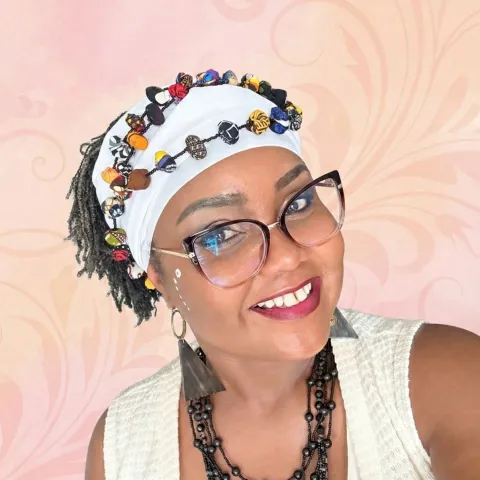
Evalyn, Kenya

I discovered a lump one morning while showering. It felt unusually large, and I was startled by how suddenly it seemed to have appeared; I had never noticed it before.
Following a series of investigations - a mammogram, breast ultrasound, and ultimately a biopsy - I received my diagnosis.
That confirmation altered the course of my life. I had clung to the hope that the lump would be benign, something that could be removed so I could return to normalcy.
Instead, I was confronted by profound fear and uncertainty. I feared for my life and questioned whether I had the strength to endure treatment. Having already lost close relatives to cancer, the diagnosis felt heavy with inevitability, leaving me anxious and overwhelmed.
My greatest challenge was navigating both the physical demands of treatment and the emotional toll it took. Some of the side effects were particularly debilitating. At one point, I developed life-threatening blood clots in my lungs, and I am profoundly grateful that they were addressed in time before becoming fatal.
Emotionally, I often felt lost, misunderstood, and profoundly lonely. Waves of sadness were frequent, and anxiety about the outcome of treatment and whether it would be successful weighed heavily on me.
My support system - family and friends, truly rallied around me.
They were always available, whether to simply listen, provide encouragement, or accompany me to hospital appointments - my husband was there every single time.
During that difficult period, I was surrounded by immense love, care, and unwavering support, which sustained me in ways words can scarcely capture.
felt truly seen and heard.
My doctors took the time during every consultation to listen carefully and answer all of my questions with patience and clarity.
Every detail of my treatment was explained in a way that I could understand, which helped me feel informed, respected, and deeply appreciative of the care I was receiving.
o anyone facing cancer today: you are allowed to be afraid, tired, and unsure.
You do not have to be brave every day. Cancer may interrupt your life, but it does not define your worth or erase who you are. Healing is not only about cure. It is also about dignity, support, being heard, and knowing you are not alone.
To the healthcare system: cancer care must move beyond treating disease to caring for people.
Patients are whole human beings with families, careers, emotions, and financial realities that should be considered in every treatment plan. Compassionate communication, emotional and psychosocial support, and genuine listening are not optional. They are essential parts of quality care.
Cancer care must be inclusive, equitable, and centered on life beyond treatment. Survivorship is a critical phase that requires ongoing support, not an afterthought. When patients are treated as partners and care is designed around real lives, we don’t just extend survival, we preserve meaning, dignity, and hope.