


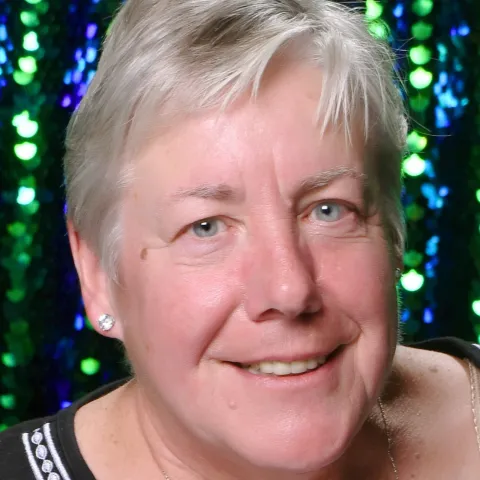
Jeanne, United States

I considered myself as a healthy, active person. I love the outdoors and all its amazing beauty and opportunities for enjoyment. I retired in mid-2024 and enjoyed five wonderful months of travel with family and friends. In August, I noticed I had a small cough just about every night as I lay down. I asked my doctor about it and was told it was probably just seasonal allergies, which I do have. The cough went away and I forgot about it. My husband and I returned Dec. 3 from a 33-day cruise to Fiji and Tahiti, feeling fine. Two days later, I was unable to get out of bed. My doctor said it was pneumonia and prescribed antibiotics not once, but twice. A chest x-ray was "inconclusive" and follow-up was recommended. On Dec. 19 I finally went to the ER, unable to breathe well. It was there that after a chest x-ray and CT, I was told I had lung cancer. I was shocked: how could a non-smoker get lung cancer? I came home on Christmas night, on supplemental oxygen and so weak I could barely walk.
I was so surprised; I'd been an advocate for taking care of my health, and had survived treatment for an unrelated cancer in 2020. It seemed impossible that I could have cancer again! My terror and anxiety increased as I wondered what my future held if this was a recurrence of the first cancer. My chance of survival looked dim in either case, but really hopeless if it was a recurrence.
I consider myself blessed that the physician sent to my ER cube that night was an oncologist. He was caring and easy to talk to, and I decided he would be my oncologist.
CT and MRI showed tumors in my lung and throughout my body; stage 4 metastatic non-small cell lung cancer was my diagnosis.
When I met with my oncologist the first time, the outlook was grim, but he circled the diagnosis of adenocarcinoma. Since I had never smoked, he said he was hopeful the biomarker testing would lead to a treatment path. We had to be aggressive in my treatment, so we scheduled chemotherapy to start the next week. As I was heading to my first infusion, they stopped us, saying results were in. I had an EGFR exon 19 mutation. He canceled chemo and put me on Tagrisso. I dealt with the usual side effects while getting stronger every day. Scans in June, however, showed that although many tumors were shrinking or gone, some new ones were rapidly growing. We then discussed our options, choosing the recently approved Rybrevant-Lazcluze combination.
The hardest part of all was the reactions to infusion and side effects. Skin and scalp rash and mouth sores were the worst but eventually eased. I continue to live with mild side effects. The emotional side of cancer also took a toll on me. When you start out thinking you'll die soon, you're overcome with thoughts about the urgency to get funeral plans made, will updated, etc. Then health improves, cancer cells die, and there's more uncertainty about how to feel. I've always been a positive person, but this experience has been a test of my optimism. I've been fortunate that my healthcare team is excellent and forward thinking, and also that my health insurance has covered most costs so far, leaving me less to stress about.
Throughout this first year of treatment, I've been blessed with plenty of support from family and friends. My husband and daughter have been my rock. Friends brought meals, cleaned and sat with me during treatments or took me for walks. My spirituality also helped, as many church members were among the many friends and strangers praying for me.
My only frustrations with the healthcare system are that although I asked for a PET scan during my surveillance for the previous cancer, one was never ordered. I think it would've shown cancer before it got so far. I was told insurance wouldn't cover a scan for the type of cancer I had.
My experience with the healthcare system has been good so far. I'm fortunate to live in a large metro area with very good healthcare systems. My oncology team has worked aggressively to obtain the best treatments for me, and have also worked diligently to treat all reactions and side effects before they go too far. They also offer many counseling and other support services. Thanks to aggressive treatment, I'm now almost cancer free and planning more trips and hikes!
NEVER GIVE UP! Be your own strongest advocate. It's your body and you know it best. Insist on biomarker testing before agreeing to any treatment plan. Get a second - or third - opinion, and leave any oncologist who talks down to you or you feel isn't doing all they can to help you. Most of all, look forward, not back.
For too many years, medical science has concentrated its money and research on male dominated cancers. Lung cancer is the biggest cancer killer but gets less attention than other cancers. Promote lung cancer screenings for all, not just former heavy smokers. As we know, anyone can get lung cancer, just like any other illness.