


Karen, Malaysia
United by Unique: Care, Distance, and Dignity in Rural Malaysia
In rural Hulu Perak, cancer does not arrive quietly. It arrives in villages surrounded by forest, in homes far from tertiary hospitals, in families where distance is measured not only in kilometres but in cost, fear, and uncertainty. It arrives in places where access is limited, information is uneven, and treatment is never just a medical decision. It is a social, emotional, and financial reckoning.
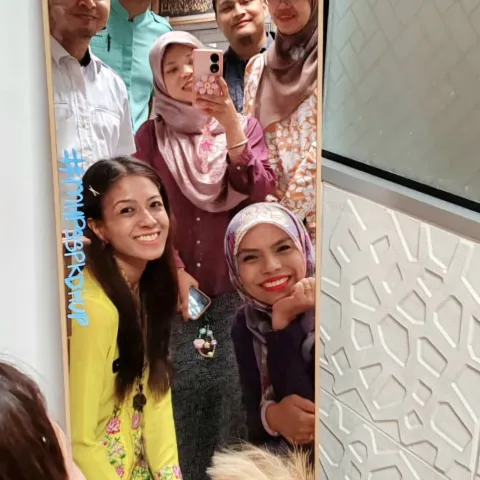
Cancer does not always begin in specialist centres here. Sometimes, it begins in primary care. It begins with us. This photo captures a multidisciplinary team: a Family Medicine Specialist, a Medical Officer leading non-communicable disease services, a psychologist, two occupational therapists, a medical assistant, and a health attendant. Different roles. Different training. Different responsibilities. Different stories.
Each of us carries a unique professional identity. Each of us sees patients through a different lens. Each of us contributes in ways that are often invisible outside our clinic walls. Yet in this setting, individuality is never a luxury. It is a necessity. Because cancer does not affect one dimension of life. It affects every dimension at once.
Before a patient ever meets an oncologist, they walk through our doors. They come with vague symptoms that have been ignored for months, fear masked as reluctance, apologies for “troubling” us, and files folded carefully, as if order might soften what is inside. We screen. We counsel. We persuade. We repeat explanations patiently. We sit through silences. We answer questions that are never really about medicine, but about survival, finances, children, and dignity.
We are often the first to say words that fracture reality: “We need further tests.” “This looks serious.” “We should prepare.” There are no private consultation rooms with thick walls. There are no specialised counsellors on standby. There is only presence, honesty, and restraint. We learn how to break bad news gently in spaces that were never designed for grief.
When treatment begins, our work intensifies. We manage side effects, monitor weight loss, adjust medications, and teach families how to clean wounds, care for stomas, prevent bed sores, and recognise danger signs. We watch patients struggle through fatigue, nausea, and emotional collapse. We coordinate referrals, chase appointments, and negotiate transport.
Definitive cancer treatment is at least two and a half hours away. Two and a half hours on winding roads. Two and a half hours while in pain. Two and a half hours while afraid. For many patients, that distance is overwhelming. Some postpone. Some default. Some quietly give up before they ever say so. Not because they do not value life, but because life, in this context, demands more than they can give.
So our roles expand. We become translators of medical language, mediators of family conflict, advocates in systems that move slowly, and bridges between villages and hospitals. We adapt constantly. When resources are limited, we improvise. When manpower is stretched, we support one another. When outcomes are uncertain, we stay present. This is not heroic work. It is persistent work.
Cancer does not only change patients. It changes us. Every member of this team has been personally touched by cancer: a parent, a sibling, a relative, a friend, a loss that never fully leaves. We do not speak about these experiences often, but they shape us. They shape how carefully we choose our words, how long we stay after clinic hours, how seriously we take “minor” symptoms, and how deeply we respect fear. Because we know where fear comes from. We know what happens when systems are late.
Our individuality does not disappear in this work. It becomes our strength. The psychologist notices despair before it becomes silence. The occupational therapists restore dignity through function. The medical assistant notices subtle deterioration. The health attendant ensures comfort when others are busy. The clinicians hold the medical narrative together. Each role matters. Each perspective protects something different. Together, they form care.
This is what “United by Unique” looks like in our reality in Hulu Perak. Not a slogan. A practice. We are united not by proximity to centres of excellence, but by responsibility. Not by technology, but by commitment. Not by recognition, but by continuity.
We return every day. We follow up. We check in. We remember names, families, and stories. We accompany patients through uncertainty, remission, recurrence, and sometimes death. There are no cameras for this. No applause. Only the quiet knowledge that someone did not walk this road alone.
Cancer turns lives upside down. It disrupts routines, fractures certainty, rearranges priorities, and forces families to make impossible choices. In rural settings, it also exposes inequity. Geography shapes survival. Income shapes options. Information shapes timing.
Against this, our team stands. Not as heroes. As witnesses. As advocates. As steady hands. We cannot erase distance. We cannot remove hardship. But we can ensure that dignity does not disappear along the way.
This is our work. Unique in form. United in purpose. And when cancer changes everything, this unity becomes the most reliable treatment we have.