


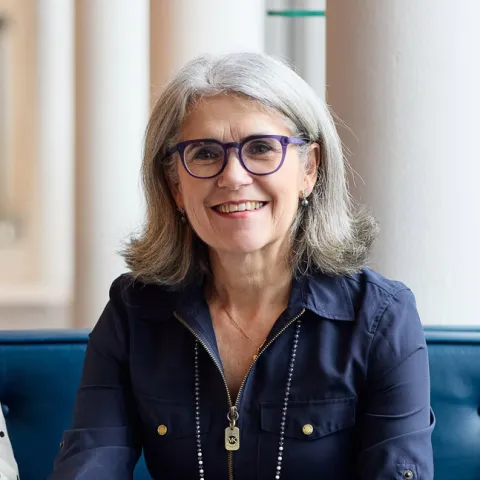
Lin, United Kingdom
I went to my doctor on and off for a year, saying that I needed to wee frequently and a lot at night. They did a urine test and said nothing seemed to be wrong.
A year later, I couldn’t stop bleeding. As I had had a hysterectomy eight years earlier for what turned out to be early-stage uterine cancer, I knew it wasn’t a womb-related problem.
I was moving house and didn’t have a GP. I rang my old GP, who said my new GP should see me even though I wasn’t registered yet. The GP wouldn’t see me, so I went to A&E.
I was seen quickly and the doctor said she thought it might be cancer. She made a phone call and said I could be admitted to hospital the next day.
I then had a kidney scan, and during the scan they could see the small tumours.
I had surgery and one dose of mitomycin. I then had regular check-ups for five years. At the end of those five years, a few small tumours had grown again. I had further surgery and another dose of mitomycin.
The pain from the mitomycin was terrible. I was screaming with pain when I urinated.
I had another check-up after six months and it had come back again. It was small, but this time I had laser surgery, which was much less painful.
This was followed by a course of mitomycin over a few months. I had a reaction in my mouth, so had to stop after three treatments.
One thing I have learned is that everyone’s experience of cancer, and how they choose to manage or talk about it, is completely personal. There is no right way.
For me, the most important thing was acknowledging it. Not pretending it wasn’t there. Not trying to carry on as if nothing had changed. Everything had changed.
The physical treatment was unpleasant, but the mental battle last year was harder than the first time round. The loss of control. Waking in the night with that heavy thought landing before anything else. Trying to stay positive while feeling frightened. Wanting to be strong for everyone else while quietly navigating my own worries.
What made the biggest difference was not grand gestures. It was simple things. People asking, “How are you doing?” and really meaning it. Small acts of kindness from unexpected people. A thoughtful gift. A kind message. When my mouth blistered after chemo, a jar of Manuka honey that brought real relief. It didn’t need a note. The jar itself said they had listened.
A colleague and client sent me a pair of warm fingerless gloves. Later, I met someone through treatment who was really struggling with neuropathy, so I sent her the same pair. She loved them. Those small things carry more meaning than people realise.
Being listened to, taken seriously, and seen quickly makes an enormous difference. Early concerns should never be dismissed, especially when something clearly does not feel right to the patient.
Compassion is not only about treatment. It is about communication, reassurance, and recognising the emotional weight that comes with a cancer diagnosis.
Try to have one medical person you can call who knows your situation and can reassure you when things feel overwhelming.
Avoid random Googling. Stick to trusted websites and organisations that specialise in your type of cancer.
Be mindful of spiralling thoughts. If you can, consider some form of therapy or counselling. It does not take the pain away, but it gives you space to voice your fears out loud and stops them building up in your head.