


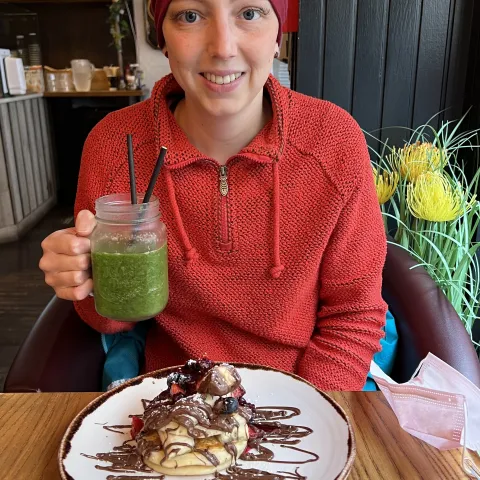
Lizzie, United Kingdom
In November 2021 I felt a small lump behind my left collarbone when putting on my car seatbelt. I presented to the GP who took some bloods and told me that there were no concerns. I realised that I was quite unwell in March 2022 when I developed stabbing pains in my chest and became so fatigued that I couldn't make it through the working day. Within weeks, I developed a range of other symptoms. I presented to a different GP who, thankfully, trusted something wasn't right and took further bloods herself on that day. I credit her with saving my life! I have read so many tragic stories of people in my situation who were dismissed and I'm so grateful this wasn't my experience. I hope the introduction of Jess’s Rule will save much heartache and many lives of others in a similar unfortunate position.
The next day, when the blood results came back, I was sent to the medics at my local hospital. After further investigations I was told I had a mediastinal mass and that it was likely a thymic carcinoma, for which there was no standardised treatment. I felt aggrieved after I got home. It was a junior doctor in A&E who was tasked with breaking the news to me, and she wasn’t able to answer any questions I had. I just waited for whatever the next steps might be. Over the course of the next few weeks had a series of further investigations which culminated in admission to the Oncology ward (due to risk of bleeding) for a CT guided core biopsy. Combined with my PET scan results, I was referred to Haematology, with Stage 2BX Nodular Sclerosis Classical Hodgkin Lymphoma.
I work as a Therapeutic Radiographer treating cancer patients in the Oncology Centre of the same hospital. My personal situation was taken into account, and again I’m so grateful. I was offered the opportunity to have my treatment elsewhere but I declined, preferring the familiarity of the surroundings and the people who I already knew and trusted to look after me.
Having to cancel our wedding during my treatment was pretty rotten. In addition, back-to-back neutropenic sepsis emergency admissions nearly defeated me physically. Repeated infections still plague me now due to my weakened immune system.
However, my biggest challenge so far is navigating life after cancer. It’s like climbing a mountain but never reaching the peak! When having treatment I was solely focussed on the potential of the light at the end of the tunnel. But afterwards, when the dust starts to settle, it really hit what I’ve been through, both physically and mentally. As a woman in her twenties, menopause and infertility have hit hard and I’m still learning to navigate them. I’ve started to accept that I always will be. It’s difficult going to unrelated appointments now (such as the dentist), who have no prior knowledge of my medical history.
My friends, colleagues, and family got me through the acute phase. Especially during my many admissions to the Oncology & Haematology wards. On top of that the Haematology CNS team were second to none and went out of their way to arrange things for my treatment. The ward staff and chemo unit staff were also always kind to me and minimised the trauma of my visits.
After my first chemotherapy regimen did not work effectively, I was escalated to a more intensive regimen in an attempt to control my aggressive disease. During this difficult time it was my GP (who was still checking in with me!) who suggested that I find a hobby. I’m not sure why but I chose cross stitch - it was mindless enough that it passed the time on the ward and I liked the repetition of it. I started making cards and I never stopped. I’m now quite accomplished and what was once mindless time wasting is now my mindfulness and key to my ongoing wellbeing.
My experience of the healthcare system during my cancer treatment was on the whole a positive one. I was continually supported and included in decisions about my care. A lot of work is now being done surrounding progressing and expanding survivorship and life after cancer initiatives. I’ve come to realise both personally and professionally just how important this is. Throughout active treatment help and support is always there. Then one day that safety net disappears; and you’re left feeling lost and unsure how to navigate this uncertain future.
Sadly, the same cannot be said for the fertility pathway after treatment finished. The injustice of a postcode lottery coupled with a system that isn’t designed to cope with the demand is just one heartbreak after another. Drastic change is needed!
Focus on the here and now, take your journey one step at a time, and don’t compare yourselves to others. Search for and ask what support is available to you, either through your NHS Trust or external charities. Talking to and reading other peoples experiences can be really helpful in alleviating the fear of the unknown and helping your prepare for the journey ahead.
I hope that in the future there is more recognition of the support needed by young cancer patients, like me, who fall outside the Teenage & Young Adult support age bracket of 25, but who face similar issues and challenges, such as treatment induced infertility.