


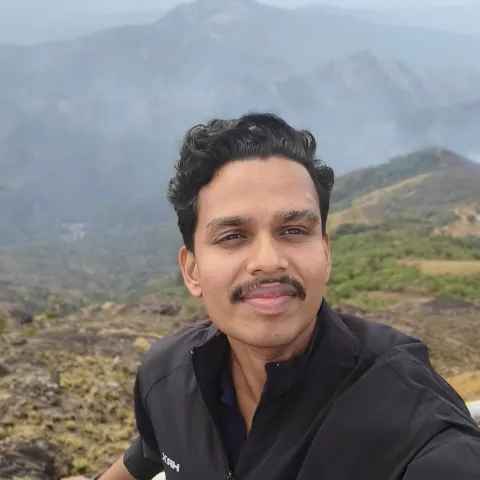
Mahesh, India
How did it start? It began subtly, the way life-altering things often do. A persistent heaviness in my head. Occasional blood tinged in my nose. Symptoms easy to dismiss, easier to endure. Work was demanding, life was busy, and I kept moving—until my body insisted on being heard. The first real signal wasn’t medical. It was emotional. The discomfort made me irritable, restless, unlike myself. Still, initial consultations pointed toward stress and workload-related issues. Months passed. Treatments continued. Relief didn’t. Choosing a second opinion changed everything. That decision—quiet but decisive—led to an endoscopy. The screen revealed what words hadn’t: a bulging area in the nasopharynx. From there, events moved with clinical precision—surgery, biopsy, IHC. The diagnosis was clear: Nasopharyngeal papillary adenocarcinoma. How did it make me feel? Heavy. Not just with fear, but with responsibility. I am a single-parent child. My parents separated early in my life. My mother’s world, her only hope, has always been me. When I told her, I expected tears. She didn’t cry. She simply said, “We can overcome this.” That sentence became my spine. My background, my reality, my emotional weight—these weren’t footnotes to the illness. They were part of the fight. Cancer didn’t arrive in isolation; it arrived into a life already shaped by resilience. And that is where the story turns—not toward fear, but toward resolve. Because survival, I learned, begins the moment you decide not to ignore your inner voice.
The illness itself was only one part of the battle. The greater challenges came from the outside and within. The weight of sympathy was unexpectedly heavy. Many people see cancer as a full stop to life, not a comma. Their fear, though well-intended, often tried to define my future before I could. Financial strain added another silent pressure—treatments, tests, and uncertainty turning survival into a logistical challenge as much as a medical one. And then there was depression—the quiet, internal fight. The moments where isolation, fatigue, and unanswered questions tried to rewrite my self-belief.
My mother was the anchor. Calm, steady, and unshaken, her belief never wavered. When uncertainty was loud, her confidence stayed quiet—and firm. My friends formed the second circle. Not with constant advice, but with presence. That mattered. Time, unexpectedly, became an ally. The forced pause from routine gave me space to read, reflect, and reset. Books offered perspective. Online courses gave me momentum. Learning helped me feel future-ready, not stuck in illness.
Overall, my experience with the healthcare system in Kerala was reassuring and humane. The system worked more often with me than around me. The doctors were supportive, approachable, and clinically sound. I felt heard, respected, and included in decisions about my care. Explanations were clear, options were discussed, and consent felt meaningful—not procedural. That transparency built trust, which is critical when the stakes are high.
Cancer is not a full stop. It is a difficult chapter—but chapters can be survived, rewritten, and even give meaning to the rest of the book. Your diagnosis does not cancel your future; it asks you to walk through it with courage, one honest step at a time. To anyone facing cancer today: listen to your body, trust your inner voice, and never hesitate to seek clarity or a second opinion. Strength does not mean being fearless. It means showing up, even on days when hope feels thin. Accept help. Protect your mental health as carefully as your physical health. Healing is not only about medicine—it is also about belief, learning, and purpose.