


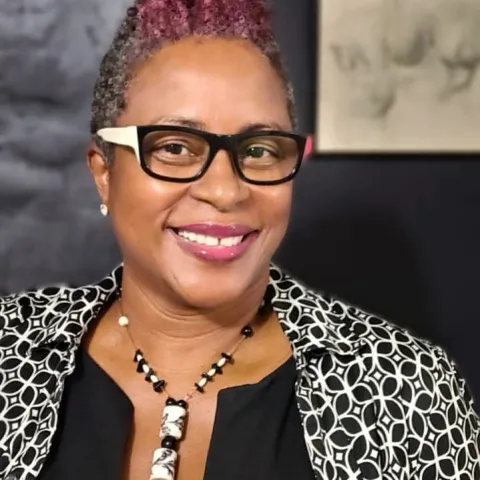
Nicole, Trinidad & Tobago

A Reflection on Social Innovation, Cancer Care, and the Architecture of Dignity
On 29 December 2006, I made a deliberate decision to step into a future that had no visible blueprint. At the time, the choice looked unconventional. In hindsight, it was necessary.
The new world that I was entering was not going to become simply a fitting consultation room, but a room of social innovation. A place to design and refine the collective blueprints of care.
The world I was about to emerge into did not yet have language or structures designed to support bold innovation. What I was stepping into was ambiguity and an unshakeable sense that care itself needed to be reimagined.
Nearly two decades later, that decision has shaped a body of work rooted in women’s health, post-cancer care, and the often-overlooked realities that begin after treatment ends.
The Gap After Treatment
Cancer care does not conclude with surgery, chemotherapy, or radiation. For many women, that is precisely where a different journey begins, one marked by multiple layers of vulnerability, steeped in other emergent and unspoken needs.
Our main priority is to direct a pathway to recalibration and adaptive change, through the alleviation of systemic gaps.
Post-mastectomy experiences are frequently envisioned through the lenses of secondary concerns. Yet these elements profoundly influence overall wellbeing. When wellbeing is compromised, dignity is compromised and the ess nce of recovery is affected.
My work has consistently focused on the alleviation of the associated burdens.
Through an approach focused on education, care, and advocacy, I have witnessed how seemingly “small” interventions, the right interventions, informed guidance, compassionate touch, culturally aware support can dramatically change a woman’s recovery experience.
This is not ancillary care.
It is essential care.
Building New Pathways
Choosing social innovation and innovative methods meant building where no infrastructure existed. It meant translating lived experience into systems, programmes, and models that could be trusted particularly in Small Island Developing States, underserved communities and globally.
Over the years, this work has extended across geographies and disciplines, connecting health education, caregiving innovation, leadership development, and policy-adjacent advocacy. It has also required a constant negotiation between credibility and compassion, between global standards and realities in real time.
What has remained constant is a belief that care must be designed with the body in mind, not as an afterthought.
World Cancer Day: A Global Conversation That Must Go Further
World Cancer Day plays a critical role in elevating awareness, prevention, and access to treatment.
And as this global movement continues to evolve, I have a responsibility to deepen the conversation around the dedicated focus to patient-focused care.
We must ask harder questions:
What does care look like?
What does dignity feel like?
How do we underscore informed care?
Cancer diagnoses do not only alter lives. It alters landscapes.
Looking Forward
This anniversary is not a celebration of departure, but a recognition of direction. Leaving certainty allowed for the creation of pathways that now serve women navigating some of the most vulnerable moments of their lives.
As we look toward the future of cancer care, innovation must extend beyond medicine alone. It must include how people reimagine their lives fully supported, fully informed, and fully seen.
That is the work ahead.
And it requires consistency and constancy.
Nicole Joseph-Chin is a Certified Mastectomy Care Practitioner with over twenty years of experience in Post-Surgical care arena.
Her dedicated work in empowerment, public education and advocacy has been instrumental in changing the perception of care and social advancement.