


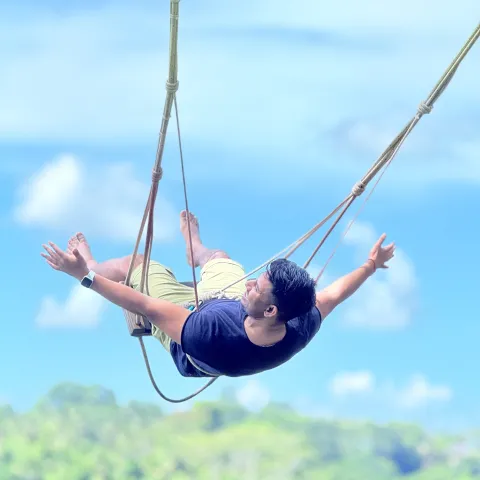
Niren, South Africa
I was 34 when I received two cancer diagnoses at the same time. They were synchronous and unrelated: stage 3 cancer in the head and neck region, alongside stage 1 thyroid cancer. It was unexpected and clinically complex, and it forced an immediate reset in how I thought about time, priorities, and resilience. News like that doesn’t arrive gently. It lands all at once and demands that you respond just as quickly, even while you are still trying to process what it means.
The journey began with a complicated surgical procedure involving multiple specialists. The surgery itself didn’t go well, and in the early hours of the morning I had to be taken back into theatre due to a haematoma. That became the first real speed bump in what would turn into a long and demanding journey. It was an early reminder that recovery rarely follows a neat or predictable path, and that progress is often accompanied by setbacks. Still, you steady yourself, absorb what has happened, and move forward. For a brief moment after that, it felt as though momentum might finally be on my side, but that didn’t last long. The final histology report confirmed that radiation would be required, and that marked a clear turning point. Cancer does not move in straight lines. It tests your ability to adapt, recalibrate, and continue executing when plans change. In those moments, what matters is not how you feel about the change, but how you respond to it.
Radiation introduced a new rhythm to daily life, with appointments that became non-negotiable, energy levels that steadily declined, and recovery that demanded patience, structure, and consistency. There was nothing dramatic about it. It was repetitive, cumulative, and physically demanding, and progress did not come in big breakthroughs or defining moments. Instead, it arrived quietly through discipline, routine, and showing up every day, even when motivation was low and fatigue was high. That is where the real work began.
As my body weakened, my mindset had to take over. I narrowed my focus to what I could control - things like arriving for treatment, following medical guidance, managing recovery, and staying present. Early on, I made one deliberate decision, going to the gym was non-negotiable. Even on the hardest days, I trained for thirty minutes, pushing my heart rate to around 70% of its maximum. It was not about chasing performance or aesthetics, but about holding on to my sense of identity. Those daily sessions became an anchor because they helped me feel like myself again, or at least like the person I used to be. Movement reminded me that I still had agency and that my body, despite everything, could still respond to effort.
Some days were harder than others, eating became difficult, fatigue accumulated, and the routine often felt relentless. Losing my sense of taste was challenging, but losing my facial hair was unexpectedly harder, because it felt like losing a visible part of who I was - quite a big part of my identity. It was a reminder that cancer does not only affect your health, it changes how you see yourself. Experiences like that force you to confront who you are beneath appearances and habits. All things considered, the approach remained the same - take it one day at a time, without wasting energy on what might come next. Resilience, I learned, is not emotional, it is operational. It is structure under pressure and consistency when conditions are imperfect.
What also became clear during this period is that recovery is never an individual effort. Behind every appointment sits a system of care, with clinicians, nurses, family, and friends all playing their part. You do not move through something like this alone. Strength is built collectively, not in isolation, and accepting support is not weakness, it is part of continuing forward.
Being diagnosed relatively young changes how you operate. You become more deliberate with your time, you stop entertaining distractions, and you gain clarity on what truly deserves your energy. The experience did not redefine who I am, but it refined how I move through complexity. It strengthened my ability to function under uncertainty, reinforced the value of discipline under pressure, and sharpened my focus on what matters most.
Today, I do not look back on that period as a story of illness. I see it as a season of forced focus, a compressed period of learning that strengthened my capacity to adapt quickly, stay grounded, and keep moving forward regardless of circumstance. Sometimes life condenses years of perspective into a few months, and in the end, you do not wait to feel strong before you act. Progress is not built on emotion, but instead it is built one day at a time, through consistency, commitment, and the quiet decision to keep going.