


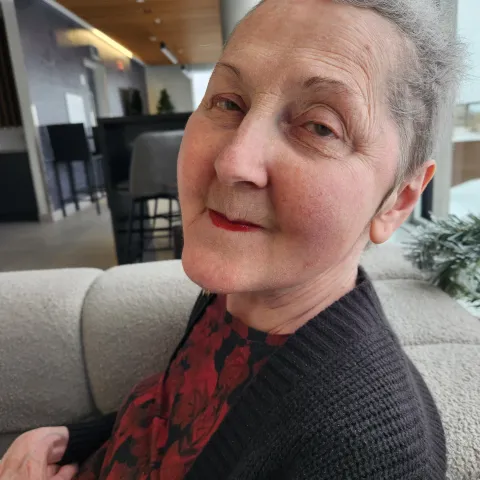
Anne, Canada shared by Robert

Anne’s diagnosis There were some red flags, with her saying bizarre things, but it certainly didn’t point to a brain issue. And then, she fell on May 8, and we walked from our house to the hospital. Anne had an MRI that detected her brain tumour, with her surgery taking place only four days later. More precisely she was diagnosed with stage four incurable glioblastoma and given about a year to live. I felt as though I had been hit by a train. I was about to lose my partner of 46 years. We barely had time to think about the treatments that were decreed post op. The entire situation descended upon our family like a sinister incubus.
The biggest challenges were all of the above. The radiation treatments and chemo left Anne devastated, physically impaired and non verbal. We had to decide whether she should continue with the chemo and opted instead for palliative care. Finding assistance was an enormous challenge. As the sole primary caregiver, I was totally bereft. We were new to Ottawa and to the provincial healthcare system. When I finally uncovered palliative care resources, I found some solace.
Writing is a coping mechanism and is therapeutic for me. I am a published author. If you feel like keeping track of Anne’s cancer journey, I’m chronicling it here: https://robertmcbrydeauthor.com/news/ The community support I have belatedly received has been a life saver, but I am in very bad shape nonetheless: grieving and physically and mentally exhausted.
We have been very fortunate with the palliative care personnel, especially the palliative care physician. We also receive support from a wonderful volunteer, as well as from personal support workers. We have to slash our way through a multi-tentacled system though, and it is clear that the "experts" are winging it, when it comes to medication and to care techniques and approaches.
I would encourage anyone in a similar situation to mine to find an outlet. If not writing, maybe drawing or recounting stories to others—finding some way to express yourself. Also search for support within your community; discover the official and unofficial networks of assistance. Lastly, be ready to cope with contradictory medical advice and outside pressures. These elements compound the inevitable exhaustion that will overtake you. Try so hard not to be overwhelmed, which is of course easier said than done.