


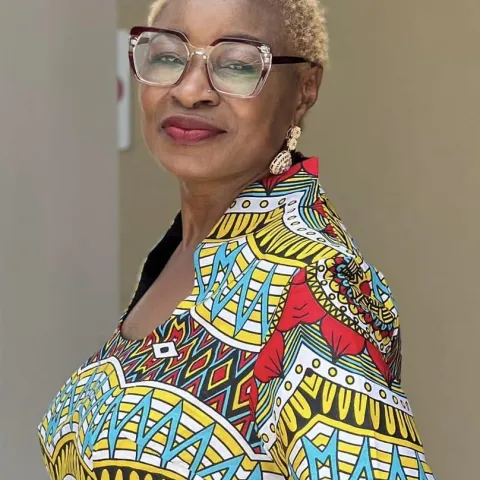
Stella-Maris, Cameroon
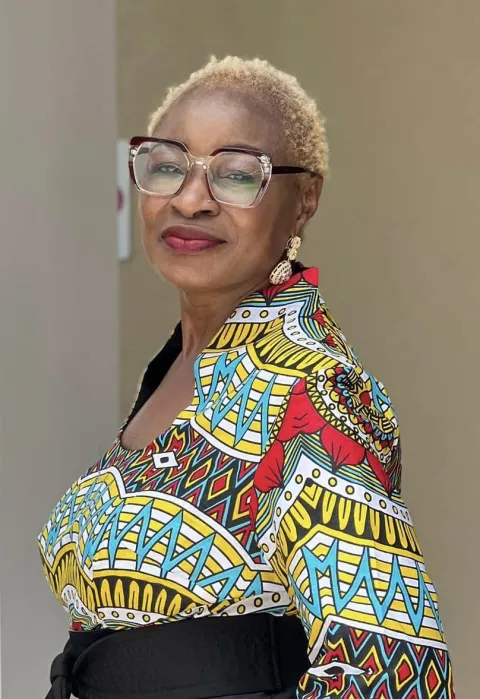
Cancer came full circle for me when my mother was diagnosed with breast cancer. As a clinician, a pharmacist, I had been involved in patient care for some years. The challenges with the lack of access that my mom faced brought the realization that there was an immense amount of work to be done in Cameroon to educate the medical community and the public about cancer. The negligence continued and contributed to the recurrence and spread, which subsequently led to her death. So I witnessed first hand the negative impact of the equity gab…the lack of resources, medical expertise, funding, policies, what have you! At one time I was caretaker of my mom, my cousin and my aunt, all undergoing cancer treatment at the same time, and all three now of blessed memory.
My mom founded the Patcha Foundation to educate women about breast cancer. After her passing we have taken on the task of keeping her legacy alive and being the voice of those in underserved settings.
So I have seen cancer from multiple angles: as a clinician, a caregiver and as an advocate.
One of the biggest challenges to people-centered care are treatment protocols and systems processes that rely on broad data without taking into account the unique needs of the individuals. Sometimes, providers focus on the patient and therefore assume an approach that is considered outside the norm but more consistent with the needs of the human being in front of them at that time. Those who are rigid, gung-ho about their systems and protocols can miss the mark eg insurance companies who cover only certain treatments for certain indications or certain stage of the disease..
Every patient I encounter reminds me of my mom. Every caretaker I meet is a reflection of me. Their circumstances and experiences are uniquely theirs, yet I somehow know some of what they’re going through. They are me and my mom or cousin or aunty. We are united in those moments. So I want for them what I wished for my family members: respect, representation, validation, empowerment, inclusion; to be seen and treated as Mauritia rather than as a faceless nameless cancer patient. It is personal!
When systems value quality and patient experience, providers are incentivized to focus on what matters to patients—not just volume of services. Policies that encourage shared decision‑making empower patients to participate actively in their own care.
This includes involving patients in planning, goal‑setting, and evaluating outcomes.
Low and middle income countries lack access to cancer diagnostic and treatment services.
Without universal access, people‑centred care cannot be realized equitably. Where access is available it is strictly disease-centered with standardized processes that can prevent staff from tailoring care to individual needs, or adjustments require expertise that is not available.
See beyond the written guidelines and processes to the whole person involved and consider what is also best for their mind, body and spirit. When professionals and organizations shift their mindset from treating cancer to caring for people who have cancer, everything changes. It is the difference between people feeling truly supported through the hardest period of their lives or feeling lost inside a system. My suggestions would be to:
1. Truly listen to the patient
2. Involve the patient as a decision making member of the team
3. Treat the person, not the diagnosis
4. Be honest without being unkind. My mom’s oncologist gave her the news that there was nothing more than could be done and recommended hospice ON HER BIRTHDAY! I tried to gently stop and suggest that we postpone conversation so she could enjoy her last birthday. He loudly declared that there was no better time than the present and marched right on with an unflinching delivery of the dire prognosis. It still hurts to this day!
5. Systems and process should be simplified to reduce rather than add stress to an already overwhelmed patient
6. Emotional and psychological support for patients, family and staff cannot be overstated.